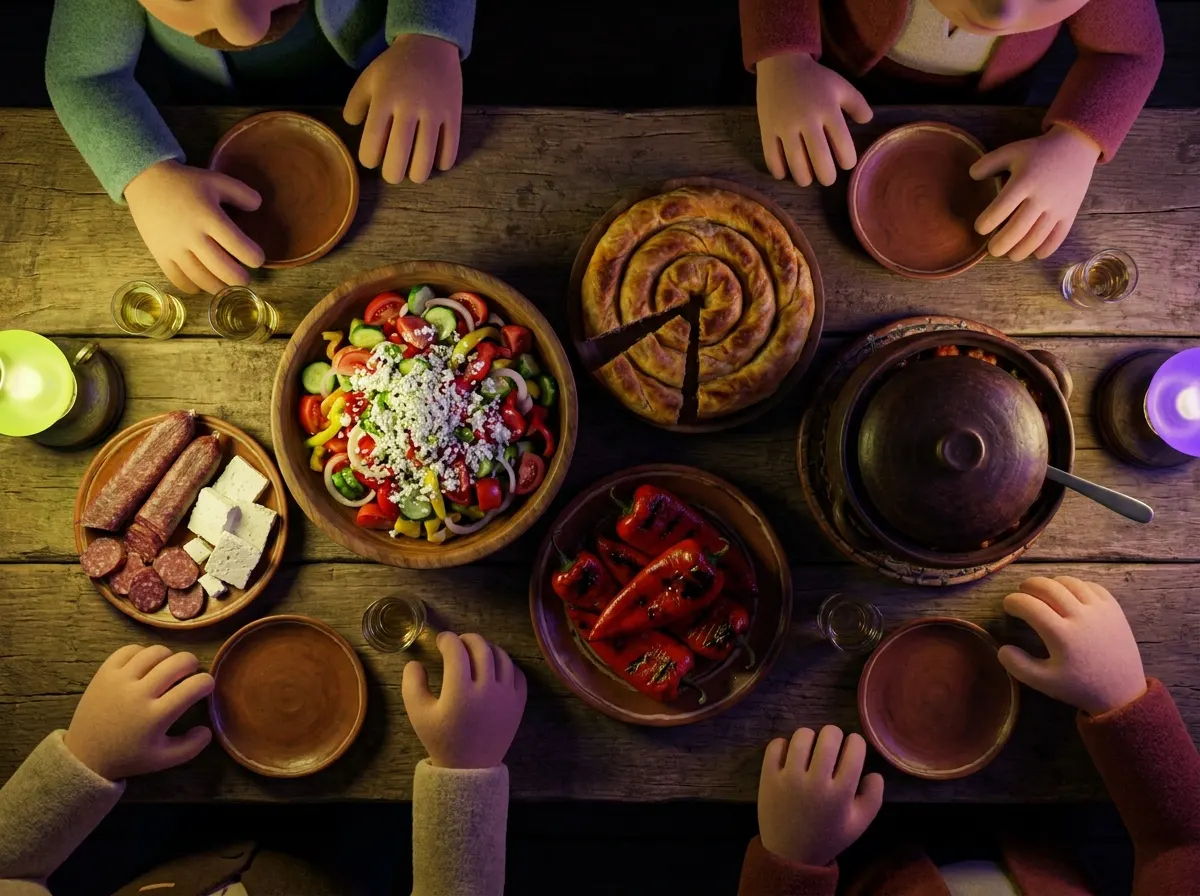
Bulgarian Food Tasting for a Bachelor Party in Sofia
Bulgarian Food Tasting
Bulgarian menus are full of dishes nobody in the group would risk ordering alone, which is how a weekend ends up on international food. A tasting settles it in one sitting: 8 to 10 dishes, every ingredient named before the plate reaches the table, and a clear answer on whether the guy who says he eats anything actually does.
Build your partyWhat's included
- A local food guide who knows the traditions behind each dish
- 8 to 10 dishes from several Bulgarian regions, all served in tasting sizes
- A traditional mehana, the kind of restaurant Bulgarians eat in
- The ingredients, the cooking method and the occasion each dish belongs to
- Rakija, local wine and Bulgarian beer, poured to match each course
- Recipe cards and background notes on the food to take home
Why groups book with us
- Sofia locals doing the planning
- One fixed quote for the whole trip
- The same planner from start to finish
- An itinerary you can still change
- Direct reservations with every venue
- Everything handled once you land
What you'll do
- Start on familiar plates - The first courses are the accessible ones, the kind nobody needs persuading to try. The dishes that take more nerve come later.
- Move to the regional dishes - Then come the regional plates Bulgarians order for themselves, rather than the version written for tourists.
- Hear what each dish is for - Every plate arrives with its context: who cooks it, the occasion it is cooked for, and why it still matters in this country.
- Reach the difficult plates - This is where the eat-anything claim gets tested, against flavors and cooking methods nobody at the table has met before.
- Wait for the tripe soup - Bulgarian tripe soup arrives and the phones come out. Somebody quietly decides, before the plates are cleared, that lukanka is the best thing on the table.
What you'll need to bring
- An open mind about food you cannot identify on sight
- An empty stomach, because the plates keep arriving
- A camera for the first bite and the face that follows it
- Enough honesty to order the dish again after saying you would not touch it
Reviews from groups who booked with us
-
Our Sofia stag do was everything we hoped for and more.
-
Best stag weekend ever! The level of organization was impressive, and every detail was taken care of.
-
Outstanding service and brilliant activities! The team's local knowledge made our Sofia stag do truly special
-
An unforgettable experience from start to finish! The Sofia stag do organized by this team exceeded all our expectations. Thanks to the party planner Joana for an epic weekend :)
-
Absolutely incredible weekend in Sofia! The activities were well-planned and our guide was knowledgeable and fun. The highlight was the beer tasting tour - recommend! Thanks for a fantastic stag do!
-
Hats off to the organizers! Thanks to the team for making this trip hassle-free and insanely fun.
Sofia food tastings: the mehana, the dishes and the guide
A tasting does two jobs at once: it feeds the group and it explains where they are. Every plate reaches the whole table at the same time, so the reactions are shared and the dares start there. Bulgarian cooking is worth the attention once the table knows what each dish is and how it was made.
Eating abroad usually comes down to guessing. Not at this table. The guide names what is in each dish before it arrives, so nobody is left holding a plate he cannot eat, and he will say outright which dishes visitors usually like and which ones need a second try.
No hotel dining room or international chain does what a traditional mehana does. The room, the service and the kitchen all work the local way, and with the guide supplying the background, the evening stops being a row of unfamiliar flavors and starts making sense.
The group also learns something about itself. The guy who eats anything finds the plate he puts back down. The careful one ends up ordering the same dish for the rest of the trip. And one of them will spend the remaining days explaining Bulgarian cooking to the others.
Small portions are the point. The table gets through the full range without filling up on one dish, and that changes how the rest of the weekend eats. Menus stop being a gamble, and the group orders in local places instead of defaulting to the international menu.
More Tasting & Dining
See all activities
Cocktail Tour
A guide, 4 to 5 cocktail bars and speakeasies, two signature drinks at every stop, and a mixology session where you shake your own.

Bulgarian Rakia Tasting
6 to 8 rakias poured by a local guide, meze platters on the table, and bottles of your favorites to take home.

Beer Tasting Tour
4 to 5 stops across Sofia breweries and craft beer bars, 8 to 10 beers in tasting measures, Bulgarian snacks, bottles of your favorites.

Talk to a planner in Sofia
Good venues go months ahead, and summer goes first. Send your dates and your headcount.
Bulgarian Food Tasting FAQs
The questions groups ask before they book.
1. What if one of the guys is a picky eater?
The guide picks the plates a cautious eater can start on, and makes sure everyone at the table ends up with food he wants to finish. Nothing is pushed on anybody.
2. Is it all organ meat and unusual cuts?
It is a mix. Most of the menu is food any visitor would recognize, and a few traditional plates are there to test a Western palate. Each one is explained before it reaches you.
3. What does Bulgarian food taste like?
Mediterranean, Turkish and Slavic cooking all meet here, so no single one of them explains the taste. The ingredients are local and the methods are centuries old.
4. Is Bulgarian food spicy?
Rarely. It is built on slow cooking and strong flavor rather than heat. The unfamiliar part is the combinations and the preparation, not the chili.
5. Can the tasting handle allergies and vegetarians?
Yes. Bulgarian cooking carries a long list of vegetarian dishes, and the guide plans the menu around whatever the group cannot eat. Send the details to your planner in advance.
6. Do you cook anything during the tasting?
The session is eating and explanation. You leave with the recipe cards, plus a few tips from the kitchen, and some tastings add a short cooking demonstration if the group asks for one.
7. How much food does the tasting add up to?
8 to 10 dishes plus sides, all of it in tasting sizes. Together that is a full meal. You leave full rather than uncomfortable.
8. Which drinks are poured with the food?
Local wine, Bulgarian beer, rakija, the country's fruit brandy, and the traditional soft drinks for anyone not drinking. Each pour is chosen for the plate it comes with.
9. Is the tasting more about culture or about eating?
Both, at the same table. The history and the traditions arrive with the plates, so the group picks them up over a long meal instead of a lecture.